At Long Last… Your Pictures!
November 12, 2010
…and just in time for portfolios, too. Beneath you’ll find a link to the photos that we’ve accumulated over the semester– of specific projects, of our notes and maps, and of the hustle & bustle as we prepped for the National Day on Writing.
Feel free to use the photos in your portfolios– but do be courteous: if it’s a picture of something an individual or small group put together, please ask their permission to use it.
Our (untagged, unorganized) Flickr Photostream

Sample Portfolios
November 8, 2010
Here are the sample portfolios that we looked at in class today. In addition, you’ll find a .doc for download with some notes on the Yancey reading and a section to help you connect that to this project.
David Kennedy’s writing portfolio
Jon Michael Anzalone’s writing portfolio
Laura Davis writing portfolio
Student Writing Portfolio (pdf of commented on Microsoft Word doc)
Remediation Examples
October 24, 2010
We went over and analyzed a few examples of mediated artifacts in class to try out Bolter & Grusin’s theories of Remediation– here is what we came up with…

Why do you go to a football game?
Immediacy – more realistic, you are actually there, feeling everything first hand.
But while there,
what do you do?
Hyperimmediacy – you watch the jumbotron; which delivers immediacy through hyperimmediate means
Instant replays
Entertainment between plays
Cowgirl closeups
Over-the-top-Fans
EX: Going to go get a hotdog and watching the game on the tv at the stand, while standing in the stadium with the game happening right behind the wall between you and the field. You are at the game, enjoying the atmosphere, and yet you are watching what happens through a television instead of what your eyes can see.
YouTube’s Tipp Experience
Youtube’s Tipp Experience has a unique take on the idea of remediation. They took the typical youtube video and turned it into a video in the control of the audience by allowing you to decide the fate of the bear, and hunter, in the video. In the reading piece they talk about human experience or human element, and how the we need to be aware of the medium or media. It has a lot to do with immediacy and hypermediacy because it seems transparent during the clip, but after your attention is drawn to the text box, you need to be aware of what you are watching.
Jill Gordon’s song
Through Jill’s video we are able to experience both immediacy and hypermediacy. When we began to view/listen to her song, the four of us were each watching her up-close and personal on four separate laptops, this is the example of hypermediacy. The immediacy is shown through Jill’s desire to express Bolter and Grusin’s key point in the form of a song, on Youtube for all viewers. Jill shows us multiple levels of remediation. The first level is the actual notes Jill took on Bolter and Grusin. The second level is the transformation from notes to lyrics. The third level is Jill’s performance of the clever song she created. The fourth level is the Youtube video broadcasting her remediation.
Taylor Mali poetry & kinetic typography
This video started out as a written poem which was then performed by Taylor Mali and this performance was caught on video. Ronnie Bruce then came in and took away the visual of the performance to put in a visual that he created using typography. So instead of seeing Taylor Mali, the viewer sees the poem written out and forming images such as a tree with limbs. It is clear that this video is taken from its original context (due to the intermittent audience reactions) and transformed into something new, keeping the video between immediacy and hypermediacy. The audio and visual compliment each other, the viewer wouldn’t get the same experience if Bruce hadn’t used the audio of Mali’s performance. The tones of speech give life to the images that Bruce creates with the words, so the one could not work without the other. When we put the video in “full screen” mode, it become immediacy since it is less obvious to the viewer that they are seeing something on someone’s Vimeo page. When looking at it on a regular screen, the immediacy of the video is interrupted by everything else that is going on on the webpage. Also, the audience reaction, while old, keep the experience immediate (whereas using a laugh-track would be hypermediacy). The use of typography for visual instead of the original performance tries to blend the two together seamlessly.
CNN’s 2008 Election coverage
The video of CNN’s use of a hologram we noted that the hypermediacy of the hologram caused a desire for immediacy of her actually being in the same studio. Watching the video it seemed stupid to have Jessica Yellin in the studio via hologram and we all wanted to just have her on the phone or on a live video feed into the studio. After watching the video that explained how they actually made the hologram and how much technology went into the process for the 45 seconds of Jessica Yellin talking, the hologram seemed even more stupid. The designer had to take a special trip to Israel to get some new technology for this process of live hologram news feed/interview. Having that knowledge now, that they can hologram people it creates a desire to see more and more people being “beamed down” into the studio when they do an interview. If they don’t have it we don’t like it, if they do have it we don’t like it.
Strunk & White vs. Williams: An Error-off
October 6, 2010
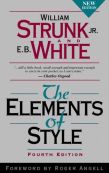

For class we read portions of Strunk & White’s Elements of Style and we also read Joseph William’s article “The Phenomenology of Error.” Then we staged a little debate in class. Here, we’ll posted what we think each would say to the other– some will post what they think Williams should learn from Strunk & White; others will post what they think Strunk & White should learn from Williams.
Here comes project 1…
September 30, 2010
Here you go, folks– have a look at the very smart projects your friends and colleagues completed for round 1. Pretty impressive, huh?
Katie A – Prezi on Digital Natives
Amanda- FB Group – Digital Natives
Shannon- Blog on textual active online identities
Abby – VuVox on Audience
Keyla C – Prezi on Remediation
Ramona- Prezi on Rhetoric
Eliot- Negroponte YouTube video
Lauren- Prezi on Interpretation
Lentaya- Digitization Powerpoint
Tara- Digital poster on 5 Canons of Rhetoric
Christianna- Vuvox on The Rhetorical Situation (in the kitchen)
Chelsea- VuVox on Convergence
Kayla M- Rhetorical Situation blog
Katie M- VuVox on Ethos, Pathos, Logos
Amelia- digital collage on The Power of Rhetorical Constraints
Stephanie- Youtube video on Kress’ Definition of Reading
Morgan- video on Rhetorical Situation (as a football game)
Michelle- 5 canons board game
Claire- blog about Girl Talk as Convergence
Kevin- Digital Natives blog
James- Digitized Rohrschach Blots
Walt- Prezi on Social Identity
Yancey & the “New” Major
September 22, 2010
Here are our notes from this morning’s discussion of Yancey’s “Composition in a New Key” (click the image to enlarge it)– and here’s a link in case you want some more information on EWM…
and here is the “Academic Map” from Undergraduate Studies…

What do we know?
September 9, 2010

As promised, a blog post to summarize and synthesize what we’ve covered so far. So, in 200-300 words: what do you feel that you can intelligently say about writing and editing in print and online?
Anti-Advertisements
September 8, 2010
Since we had so many, I figured it might be easier to post the anti-advertisements as a slideshow. Feel free to leave comments for your classmates telling them what you thought of their anti-ads…and be sure to let me know if any are missing.
Multimodal Sample Projects
September 2, 2010
Hey folks, since we didn’t have time to check out any student sample projects today in class, I figured I’d post links to a few on here. The options are pretty open, so you’ll notice the projects can be very different from each other.
The Rhetorical Situation- this student decided to make a video to explain Bitzer to new WEPO students:
Here’s one that used all of the key terms from WEPO (it was a final project) to create a crossword puzzle:

and finally, here is a blog (with video, slideshow, etc) about Psychobilly music– obviously this one isn’t on a keyword, but it does give you an idea of how modes and media can match in interesting ways…
* Keep in mind that there are many more options than are represented here and that you are welcome to use any constellation (a combination of mode and medium) that suits your purpose and audience!
Wordling our Key Terms
September 1, 2010
Today in class we grouped up into fours and shared our key terms for the first 5 readings (Bitzer, Covino & Jolliffe, Negroponte, Palfrey & Gasser, and Kress). After combining terms, we created wordles– and here they are. Take a moment to click on each one and notice teh differences between the terms that show up– and their relative size (remember that word size is a function of how many times the word is repeated in the list)…


